
The Real Difference Between a College Degree and an Education
L
By Lucas Rollins on October 10, 2026
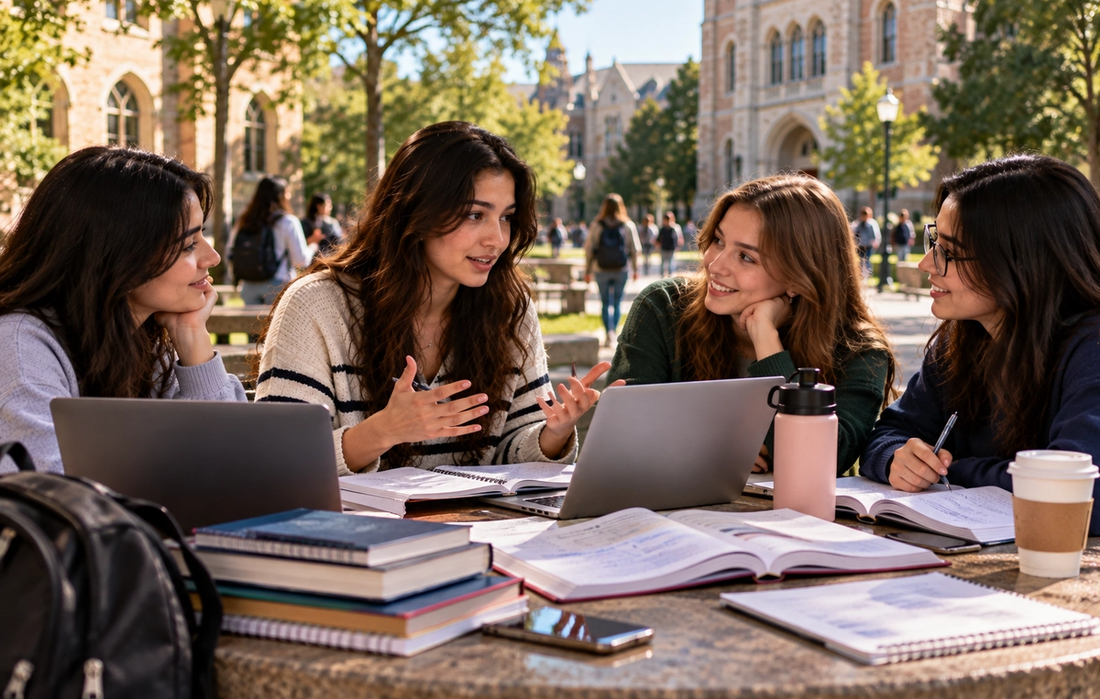
A college degree and an education are often treated as if they’re the same thing. You enroll, attend classes, pass exams, collect enough credits, and eventually graduate. At the end, you’re considered educated.
But those two things aren’t quite identical.
A degree is a credential. It shows that you completed a particular academic program and met its requirements. An education is broader. It includes what you understand, how you think, what you can do with what you’ve learned, and how your view of the world changes along the way.
Ideally, college gives you both. But getting the degree doesn’t automatically guarantee the education.
A degree proves you completed something
A college degree has a clear practical purpose. It tells employers, universities, licensing bodies, and other institutions that you completed a recognized course of study.
In some professions, that credential is essential. You can’t simply read extensively about medicine and decide to become a doctor. Many careers require formal education, specific qualifications, supervised training, or professional licensing.
Even when a degree isn’t legally required, it can still matter. Employers may use educational qualifications when screening candidates, and completing a degree can demonstrate persistence, subject knowledge, and the ability to meet long-term requirements.
That makes a degree valuable. But it’s important to understand what it actually proves. It proves that you satisfied the conditions for earning the credential. It doesn’t necessarily tell someone how curious you are, how well you can apply what you learned, or whether you remember everything you studied.
Those depend much more on what you did with your time in college.
Education is what stays after the exam
Think about a class you took a few years ago. You probably can’t remember every definition, formula, date, or reading that appeared on the final exam.
That doesn’t necessarily mean the class was wasted.
Maybe it taught you how to analyze an argument. Perhaps you learned how to research a complicated question, interpret data, write clearly, or recognize weak evidence. Maybe it introduced you to an idea that changed how you think about politics, history, science, business, or human behavior.
Education includes knowledge, but it also includes ways of thinking.
The facts you memorize for an exam may disappear. The ability to ask better questions, evaluate information, recognize patterns, and learn independently can stay with you much longer.
That’s one reason two people can graduate from the same program with very different educations.
You can pass classes without learning very much
Most students eventually become good at understanding academic systems. You figure out what will be on the test, which readings are essential, how much effort an assignment requires, and what you need to score to get the grade you want.
There’s nothing wrong with being strategic. College comes with deadlines, multiple classes, jobs, internships, and a life outside school. You can’t give maximum attention to everything.
But there is a danger in optimizing entirely for grades.
You can memorize information the night before an exam and forget it a week later. You can write a paper based on what you think your professor wants to hear without seriously engaging with the topic. You can complete a group project while contributing the minimum required amount.
Do that often enough and you may accumulate credits faster than you accumulate understanding.
A transcript can show how you performed academically. It can’t fully show what happened inside your head.
Real education requires curiosity
Some of the most valuable moments in college happen when you go slightly beyond what is required.
You read something that wasn’t assigned because a lecture made you curious. You stay after class to ask a question. You attend a talk by someone whose work you’ve never encountered before. You take a course outside your major because the subject sounds interesting.
These choices don’t always improve your GPA. Sometimes they have no measurable reward at all.
But they expand your education.
Curiosity changes your relationship with learning because the question stops being “Do I need to know this for the exam?” and becomes “Do I actually want to understand this?”
That shift matters far beyond college. Once nobody is assigning chapters or setting deadlines, curiosity becomes one of the main things that keeps you learning.
Education also happens outside the classroom
College classes are only one part of what a university can teach you.
An internship can show you how an industry actually works. A student organization can teach you how to lead people who aren’t being paid to listen to you. Living with roommates can teach you conflict resolution faster than a textbook ever could. A failed project can teach you how to recover when something doesn’t go according to plan.
Conversations matter too.
You may meet people from different countries, cultures, economic backgrounds, political perspectives, or areas of study. Being around people who see the world differently can challenge assumptions you didn’t even realize you had.
Not every valuable lesson comes with a professor, syllabus, or grade attached to it.
Part of getting an education is paying attention to what your environment is teaching you.
A degree has an ending; education doesn’t
Degrees are designed to finish. Eventually, you complete the final course, submit the last assignment, and graduate.
Education doesn’t have the same finish line.
Industries change. Technology changes. Research overturns old assumptions. New problems appear. The skills that make you valuable at 22 may not be enough at 35.
That means one of the most useful things college can teach you is how to continue learning without college.
Can you find reliable information yourself? Can you teach yourself a new tool? Can you recognize when you don’t understand something? Can you change your mind when better evidence appears?
Those abilities matter because graduation eventually removes the structure that organized your learning for years. There are no professors reminding you what chapter to read next.
You have to decide.
The best outcome is having both
None of this means degrees don’t matter or that formal education is unnecessary. The opposite argument can be just as simplistic.
Credentials have real value. Structured courses can introduce you to knowledge you might never discover independently. Professors can challenge your thinking. Universities provide laboratories, libraries, communities, mentors, and opportunities that can be difficult to recreate on your own.
The point is that enrolling isn’t enough.
If you’re already spending years pursuing a degree, try to leave with more than the document.
Ask questions that aren’t on the exam. Take a class because it makes you curious. Talk to professors. Meet people outside your usual circle. Build something. Read beyond the syllabus occasionally. Learn how to disagree intelligently. Change your mind about something.
Eventually, the diploma may help you get through a door.
Your education determines much more of what you can do once you’re inside.

How to Stop Procrastinating (Backed by Psychology)
You know the assignment is due Friday. You’ve known about it for two weeks. You even opened the document three days ago. And yet, somehow, it’s Thursday night and you’re suddenly very interested in reorganizing your desk, answering old messages, and researching something that has absolutely nothing to do with the assignment.
Legacy Park|2 weeks ago

How to Build Habits That Actually Last
Lian Everett|2 weeks ago

The Difference Between Discipline and Motivation
Joey Zimmerman|2 weeks ago

How to Become a Better Decision Maker
Noah Shepard|2 weeks ago

The Two-Minute Rule That Solves Procrastination
Lucas Rollins|2 weeks ago

How to Read More Books This Year
Colton Watts|2 weeks ago
Read More
The Real Difference Between a Job, a Career, and a Calling
Legacy Park|

The Real Difference Between Free and Paid AI Tools
Joey Zimmerman|

The Quiet Loneliness of College (And What Actually Helps)
Legacy Park|

Why “Finding Yourself” Takes Longer Than Anyone Told You
Lian Everett|

The Real Difference Between Being Smart and Being Educated
Lian Everett|

Why Some Students Peak in College (And Others Don’t)
Noah Shepard|

The Cultural Power of the College Years (For Better or Worse)
Lucas Rollins|

Why the Best Advice You Get in College Rarely Comes from a Professor
Colton Watts|

How to Use AI to Study Smarter (Not Just Faster)
Legacy Park|
The Apps Every Student Should Actually Download
Lian Everett|
How to Take Better Class Notes with Just Your Laptop
Joey Zimmerman|

How to Back Up Your Files (Before Your Laptop Dies Mid-Semester)
Lucas Rollins|

How to Spot AI-Generated Content Even When It’s Good
Colton Watts|

The Weirdest College Traditions Around the World
Joey Zimmerman|

The Movies Every College Student Should See at Least Once
Joey Zimmerman|

The Best Ways to Actually Enjoy a Weekend Off Campus
Joey Zimmerman|

The Games That Every Dorm Room Ends Up Playing
Joey Zimmerman|

The Most Unhinged True Stories from Ivy League Campuses
Lucas Rollins|

The Books That Are Actually Fun to Read (Not Just Required)
Colton Watts|

How to Stop Procrastinating (Backed by Psychology)
Legacy Park|